
If you recently got your nails done and now feel discomfort, you might wonder: why do acrylic nails hurt? You are not alone. Many beginners experience some level of soreness after getting acrylics, especially during the first 24–48 hours. However, not all pain is normal.
In some cases, mild pressure feels expected because your nails adjust to a new structure. On the other hand, sharp or lasting pain often signals a problem. Therefore, understanding the difference helps you protect your natural nails and avoid long-term damage.
In this guide, you will learn exactly why do acrylic nails hurt, what causes this discomfort, and how you can fix and prevent it easily.
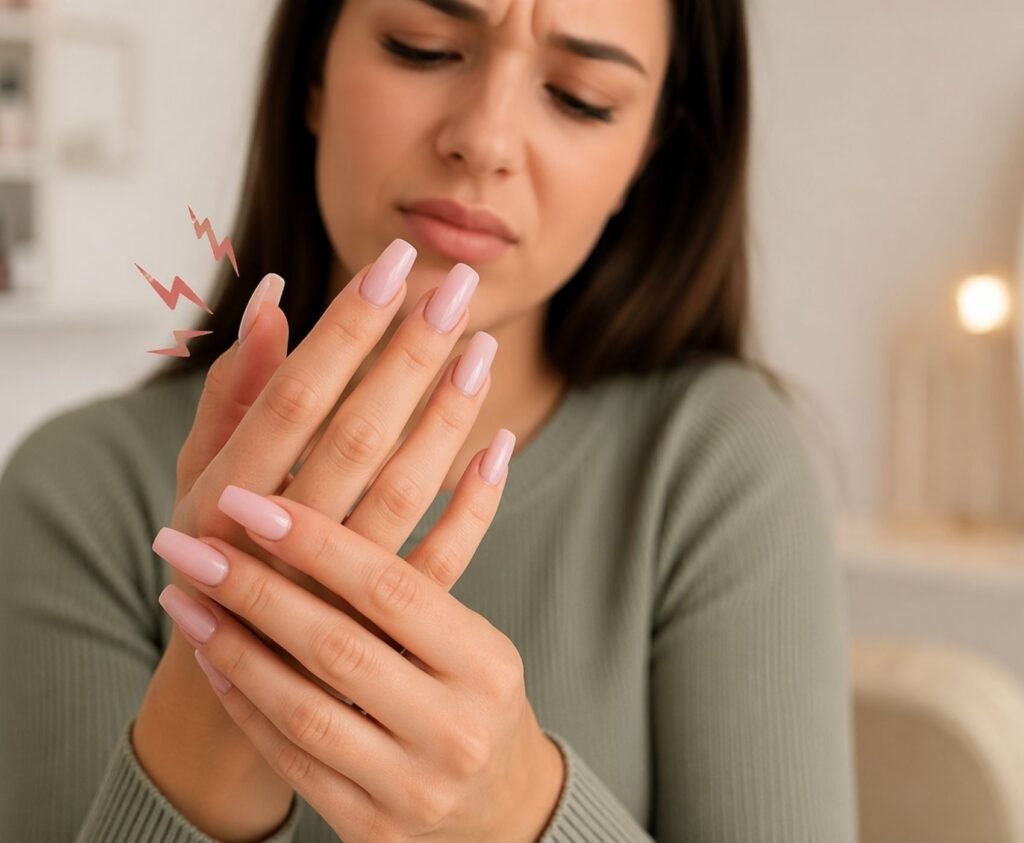
Why Do Acrylic Nails Hurt After Application?
Acrylic nails can hurt because they change the natural shape and pressure of your nails. Your nail plate connects to sensitive nerve endings, so even small changes can cause discomfort.
When a nail technician applies acrylic, they use liquid monomer and powder polymer to create a hard layer. This layer sits on top of your natural nail and forms a rigid structure. As a result, your nail loses flexibility.
Because of this, you may feel:
- Tightness
- Pressure
- Mild throbbing
- Sensitivity when touching objects
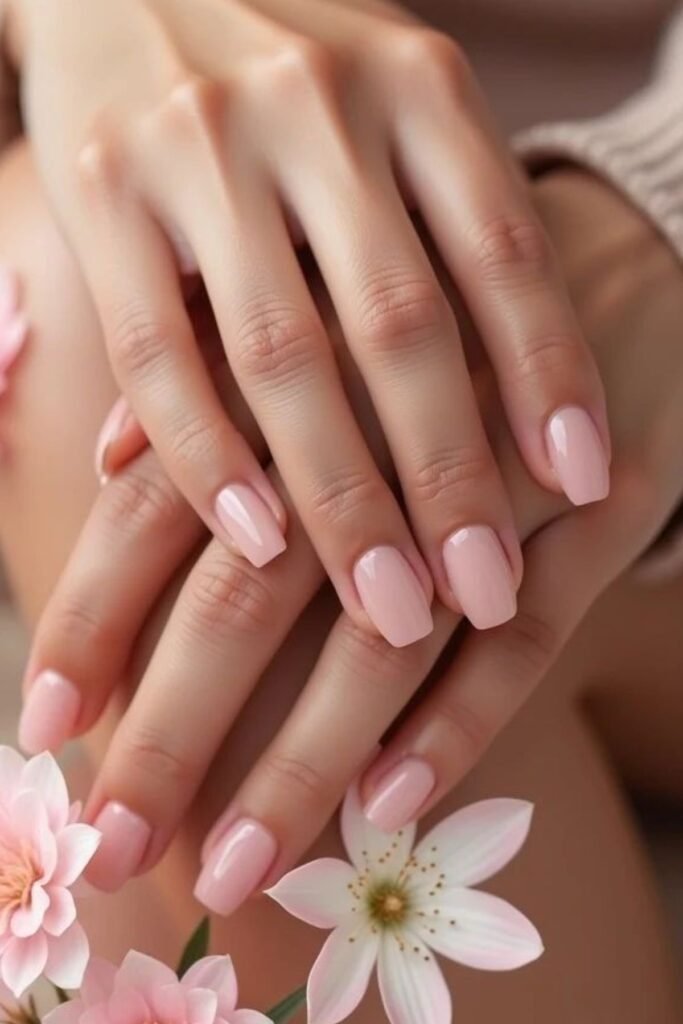
However, this feeling should fade within a day or two. If it does not, then something likely went wrong during the application process.
Common Causes: Why Do Acrylic Nails Hurt So Much?
1.Over-Filing: A Major Reason Why Acrylic Nails Hurt
Over-filing remains one of the biggest reasons behind acrylic nail pain. When a technician files too aggressively, they thin your natural nail.
As a result:
- Your nail loses its protective layer
- Nerve endings become more sensitive
- Even light pressure feels painful
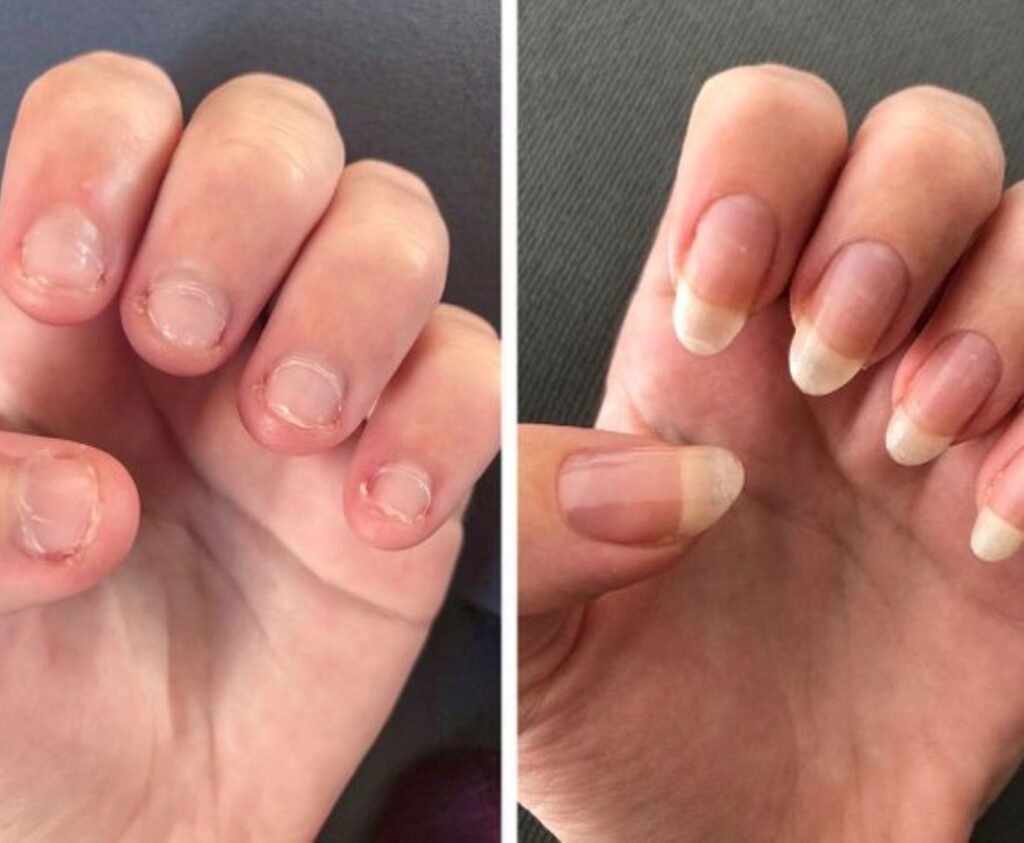
Therefore, if your nails feel sore immediately after the appointment, over-filing may be the cause.
2. Tight Acrylic Application: Why Acrylic Nails Hurt from Pressure
Sometimes, acrylic nails feel too tight. This happens when the product shrinks slightly as it hardens.
Because of this:
- Your nail feels pressure
- The nail bed stretches slightly
- Pain increases when you press or tap your nails
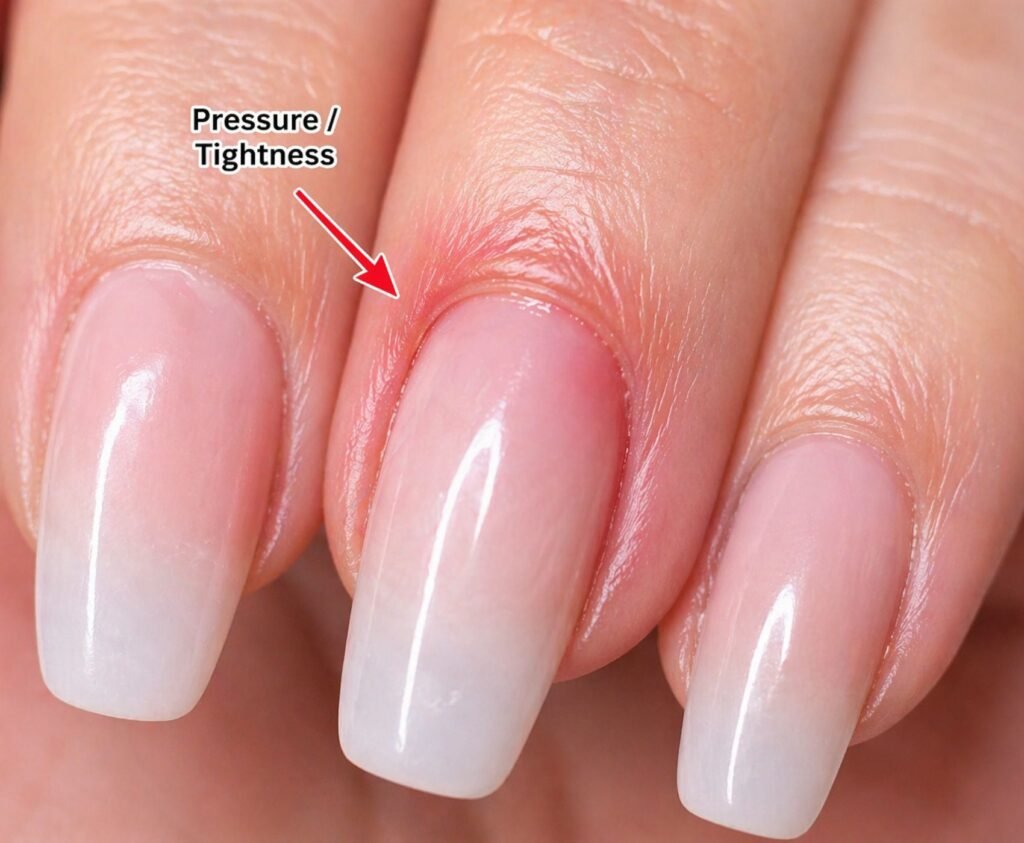
This explains another common reason why do acrylic nails hurt, especially on the first day.
3.Nail Bed Damage and Acrylic Nail Pain Explained
If your natural nail already has damage, acrylics can make the pain worse.
For example:
- Weak nails break easily
- Thin nails feel more pressure
- Previous trauma increases sensitivity
In addition, damaged nails struggle to support acrylic layers, which leads to discomfort.
4. Incorrect Nail Size: Why Do Acrylic Nails Hurt Over Time
If the nail tip does not fit correctly, it can press against your natural nail.
As a result:
- You feel uneven pressure
- Your nail may lift or pinch
- Pain increases over time
A properly sized tip should sit comfortably without forcing your nail into shape.
5. Allergic Reactions That Cause Acrylic Nail Pain
Some people react to acrylic products. Although rare, it still explains why do acrylic nails hurt in certain cases.
Signs include:
- Burning sensation
- Redness
- Swelling around the nail
- Itching
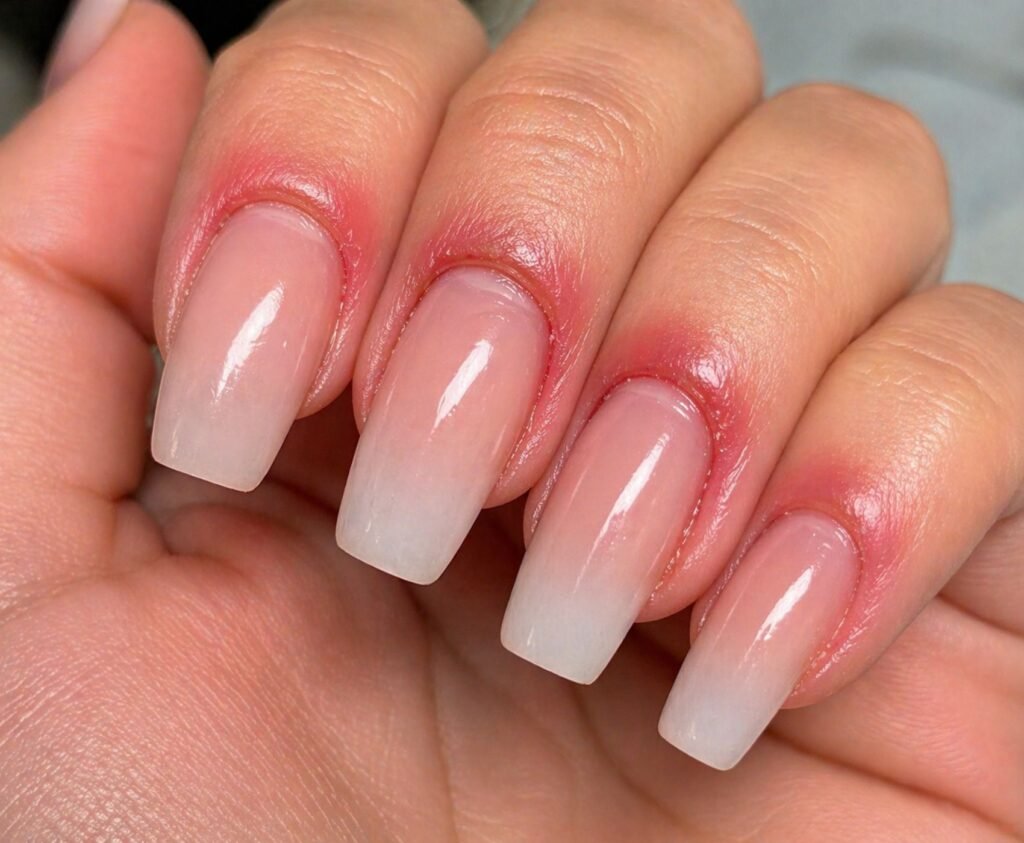
If you notice these symptoms, you should remove the acrylics immediately.
6. Lifting and Air Pockets: Hidden Reason Why Acrylic Nails Hurt
When acrylic lifts from the nail, it creates small gaps.
Because of this:
- Dirt and moisture get trapped
- Bacteria can grow
- Pain or discomfort may follow
This issue often develops a few days after application.
7. Long Nails and Pressure: Why Acrylic Nails Hurt More
Long nails look beautiful, but they add extra pressure on your nail bed.
As a result:
- Your natural nail struggles to support the weight
- Movement causes stress
- Pain increases when you use your hands
Therefore, beginners should avoid very long acrylic nails.
Why Do Acrylic Nails Hurt vs Normal Discomfort: Key Differences
Not all discomfort means something is wrong. However, you must know the difference.
Normal Discomfort
- Mild pressure
- Slight soreness
- Feels better within 24–48 hours
Warning Pain
- Sharp or stabbing pain
- Burning sensation
- Pain that lasts more than 3 days
- Swelling or redness
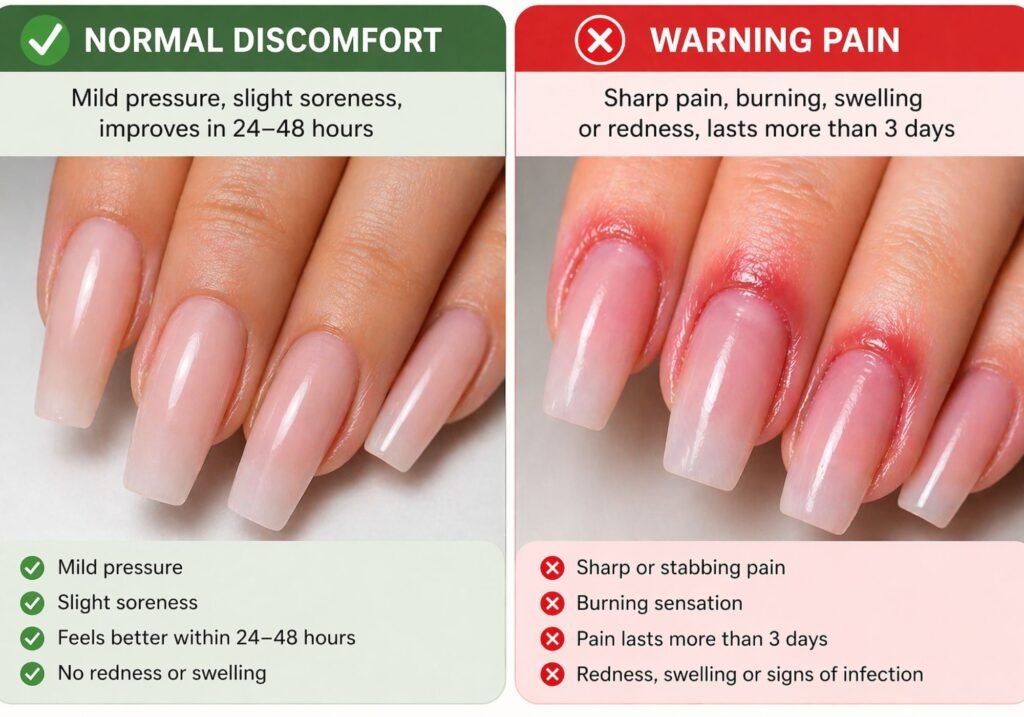
If you feel warning pain, you should take action immediately.
When Acrylic Nail Pain Becomes Serious and Why It Hurts More
Sometimes, pain signals a bigger issue. Therefore, you should not ignore it.
Watch for these signs:
- Intense throbbing pain
- Yellow or green discoloration
- Pus or infection
- Nail lifting completely
These symptoms may indicate infection or severe nail damage.
How to Relieve Acrylic Nail Pain at Home
If your nails feel sore, you can try simple remedies at home.
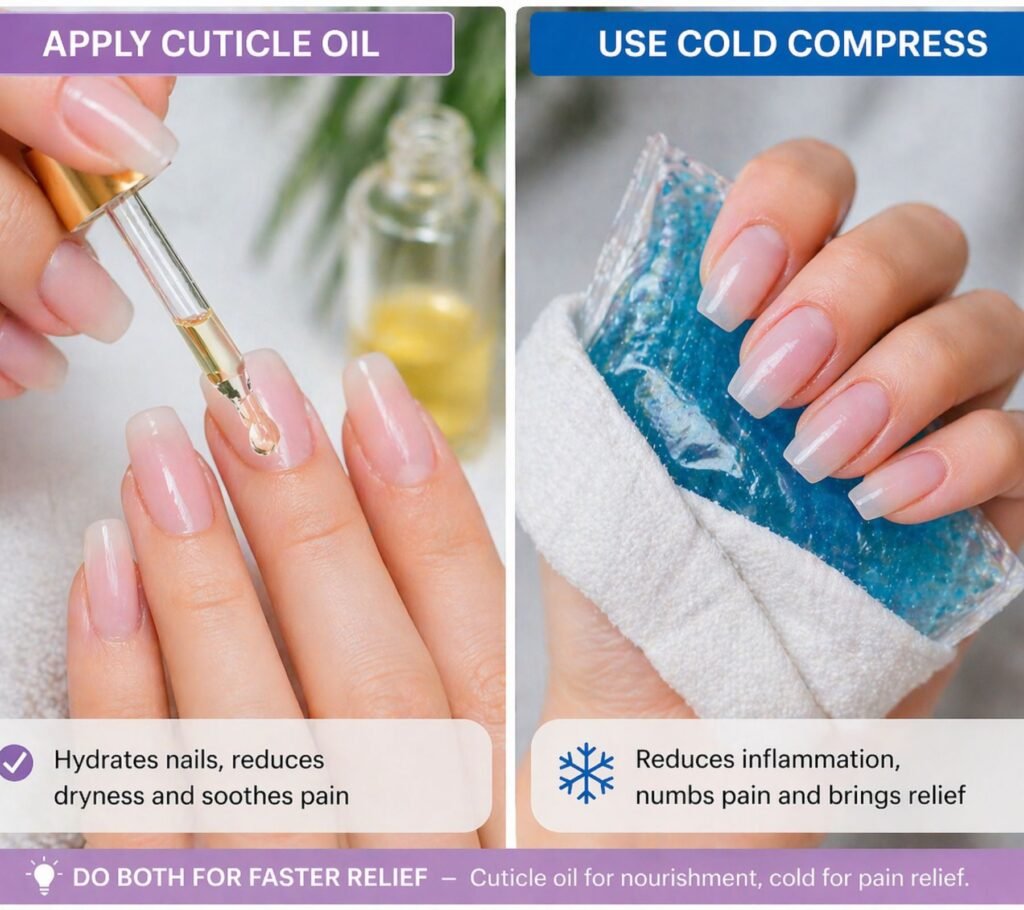
1. Apply Cold Compress
Cold helps reduce inflammation and numb pain.
- Wrap ice in a cloth
- Place it on your nails for 10–15 minutes
- Repeat twice a day
2. Take a Break from Pressure
Avoid using your nails as tools.
Instead:
- Use your fingers, not nails
- Avoid typing aggressively
- Stay gentle with your hands
3. Use Cuticle Oil
Hydration improves nail flexibility.
- Apply oil 2–3 times daily
- Massage gently
- Focus on cuticle and nail bed
4. Take Over-the-Counter Pain Relief
If pain feels strong, mild painkillers can help.
However, do not rely on them long-term.
5. Consider Safe Removal
If pain continues, remove the acrylic nails properly.
Do not pull them off. Instead:
- Soak in acetone
- Gently remove
- Moisturize afterward
How to Prevent Acrylic Nail Pain in the Future
Prevention always works better than treatment.
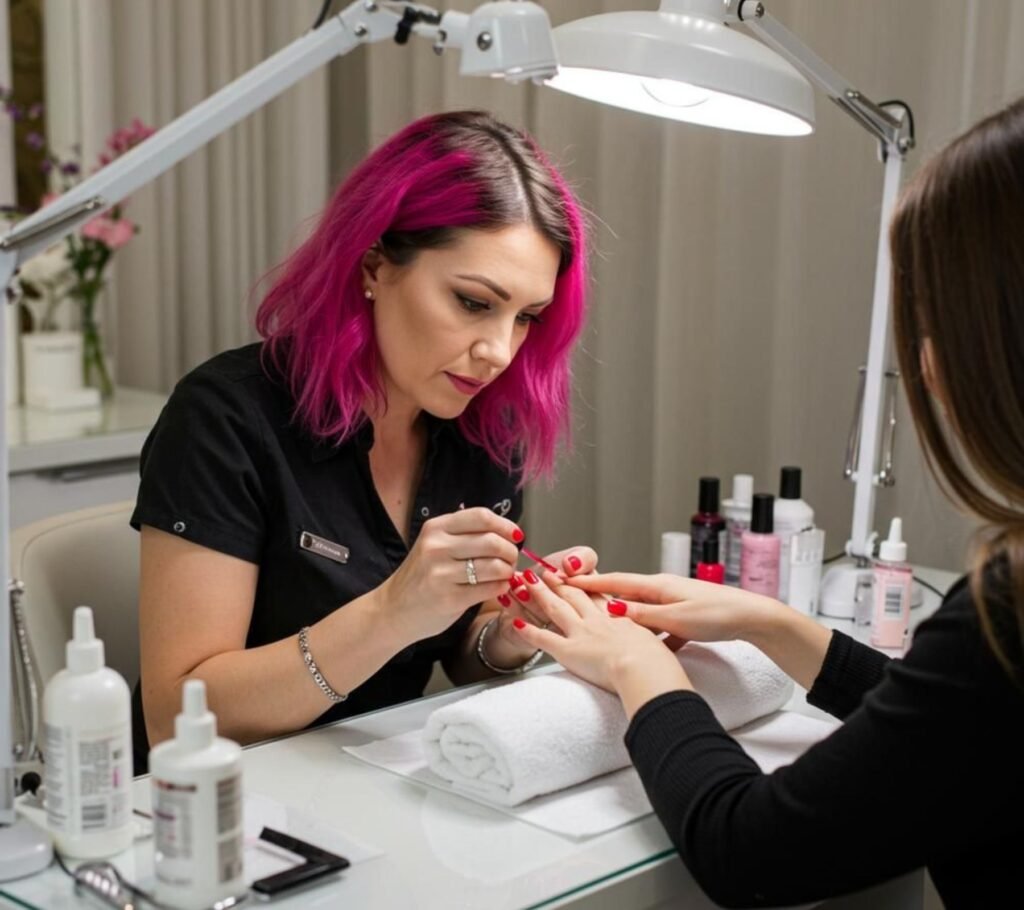
Choose an Experienced Nail Technician
A skilled technician:
- Avoids over-filing
- Applies correct pressure
- Uses proper techniques
Keep Nails at a Manageable Length
Shorter nails:
- Reduce stress
- Feel more comfortable
- Lower the risk of pain
Communicate During Your Appointment
If something feels wrong, speak up immediately.
For example:
- Tell them if filing hurts
- Ask for adjustments
- Request thinner layers
Maintain Nail Health
Healthy nails handle acrylics better.
You can:
- Eat a balanced diet
- Stay hydrated
- Use strengthening treatments
When to See a Professional
Sometimes, home remedies do not work. In that case, you should visit a professional.
You should seek help if:
- Pain lasts more than 3 days
- You notice swelling or redness
- Your nail starts lifting
- You suspect an allergic reaction
A professional can safely remove the acrylics and treat the issue.
Conclusion
So, why do acrylic nails hurt? In most cases, the pain comes from pressure, over-filing, or incorrect application. While mild discomfort feels normal for a short time, strong or lasting pain always signals a problem.
Therefore, you should pay close attention to how your nails feel after every appointment. If you notice unusual soreness, swelling, or sensitivity, take action quickly. In addition, choosing a skilled nail technician and following proper aftercare can prevent most issues.
Healthy acrylic nails should look good and feel comfortable at the same time. So, when you understand the causes behind acrylic nail pain, you can protect your natural nails and enjoy beautiful results without discomfort.
FAQs
1. Why do acrylic nails hurt on the first day?
They hurt because your nails adjust to pressure and structure changes.
2. How long does acrylic nail pain last?
Mild pain usually lasts 24 to 48 hours.
3. Should I remove acrylic nails if they hurt?
Yes, you should remove them if pain feels severe or lasts too long.
4. Can tight acrylic nails cause damage?
Yes, tight acrylics can put pressure on the nail bed and cause pain.
5. Do acrylic nails damage natural nails permanently?
No, they do not cause permanent damage if applied and removed correctly.