
Many people want to remove acrylic nails without acetone because acetone often dries out nails and skin. If you feel the same, you have several gentle and effective options. Fortunately, you can take off acrylic nails at home without harsh chemicals. In this guide, you will learn simple, safe, and practical methods that actually work. Moreover, these techniques help you protect your natural nails while avoiding damage.
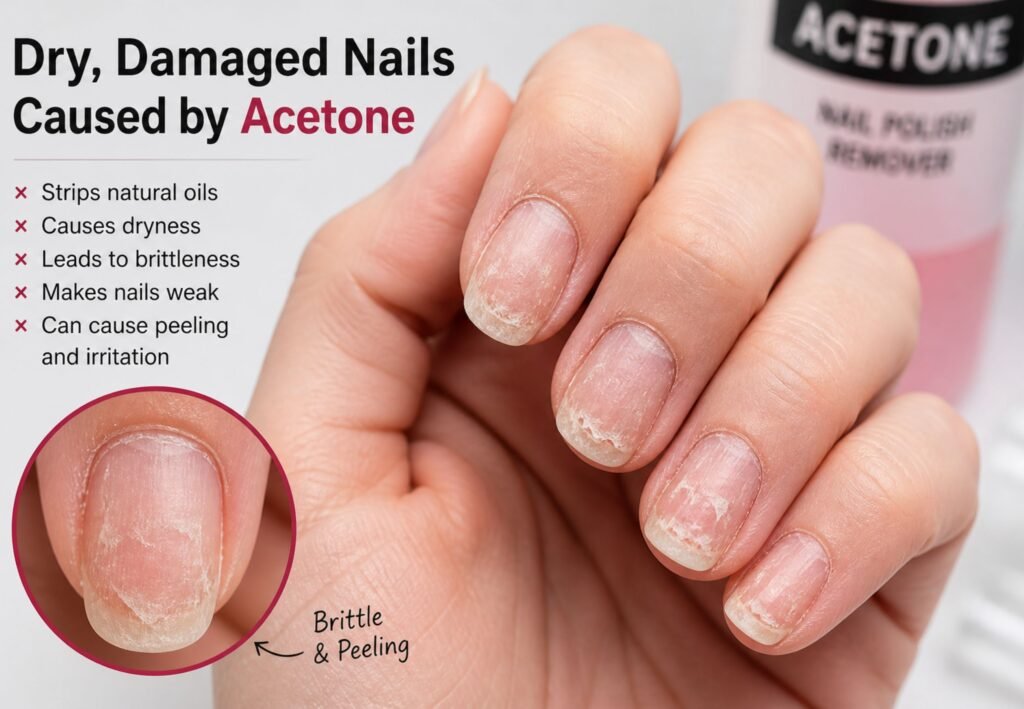
Why Avoid Acetone?
First of all, acetone works fast, but it comes with downsides. It strips natural oils from your nails and skin. As a result, your nails may become brittle and weak.
In addition, acetone often causes irritation, especially if you have sensitive skin. Many people also dislike its strong smell. Therefore, choosing to remove acrylic nails without acetone makes sense if you want a gentler approach.
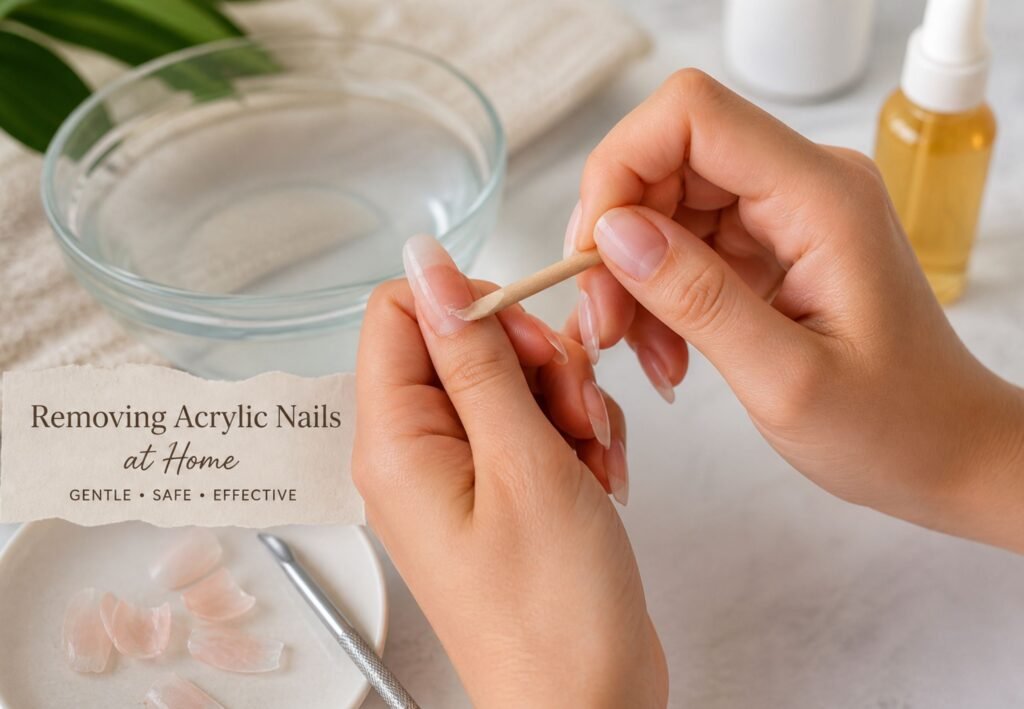
Moreover, non-acetone methods allow better control. You can remove nails slowly and safely without risking severe damage.
Best Methods to Remove Acrylic Nails Without Acetone
Now, let’s explore the best ways to remove acrylic nails without acetone step by step. Each method offers a different level of ease and effectiveness.
Dental Floss Method
This method works well if your acrylic nails already feel slightly loose.
Steps:
- First, gently lift the edge of the acrylic nail using a cuticle stick.
- Next, slide a piece of dental floss under the lifted edge.
- Then, ask someone to help you move the floss back and forth.
- Slowly push forward until the acrylic nail comes off.
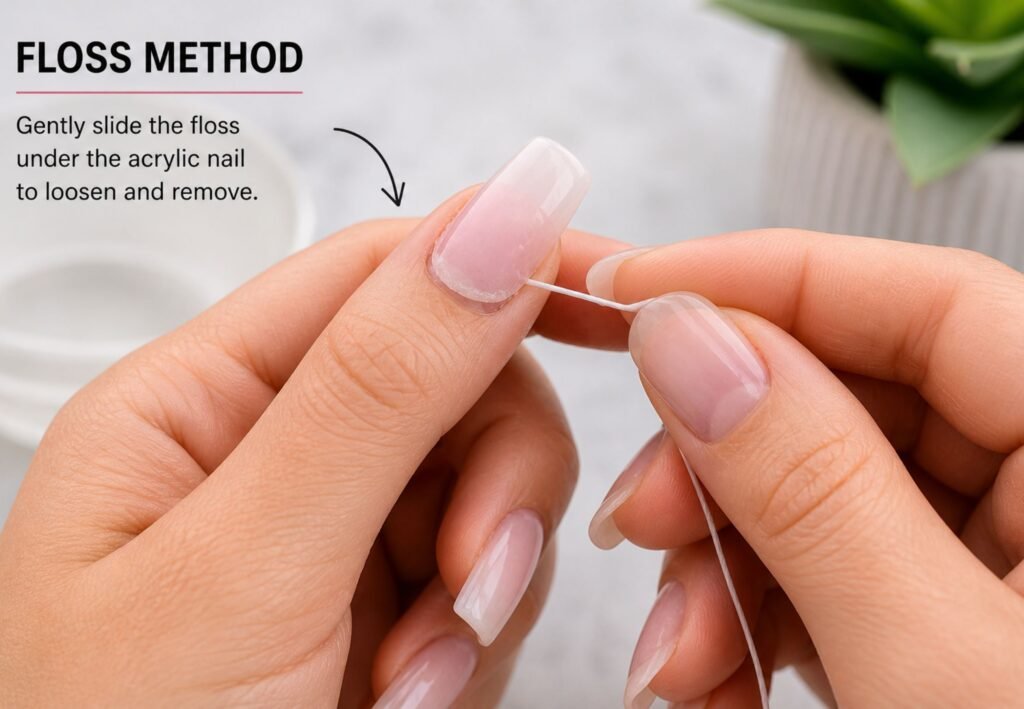
However, stop immediately if you feel pain. This method works best when the nails have already started lifting.
Warm Water Soak Method
This method remains one of the safest ways to remove acrylic nails without acetone at home.
Steps:
- First, fill a bowl with warm water and add a few drops of soap.
- Next, soak your nails for 20–30 minutes.
- Then, gently try to loosen the acrylic using a cuticle pusher.
- Repeat the soaking process if needed.
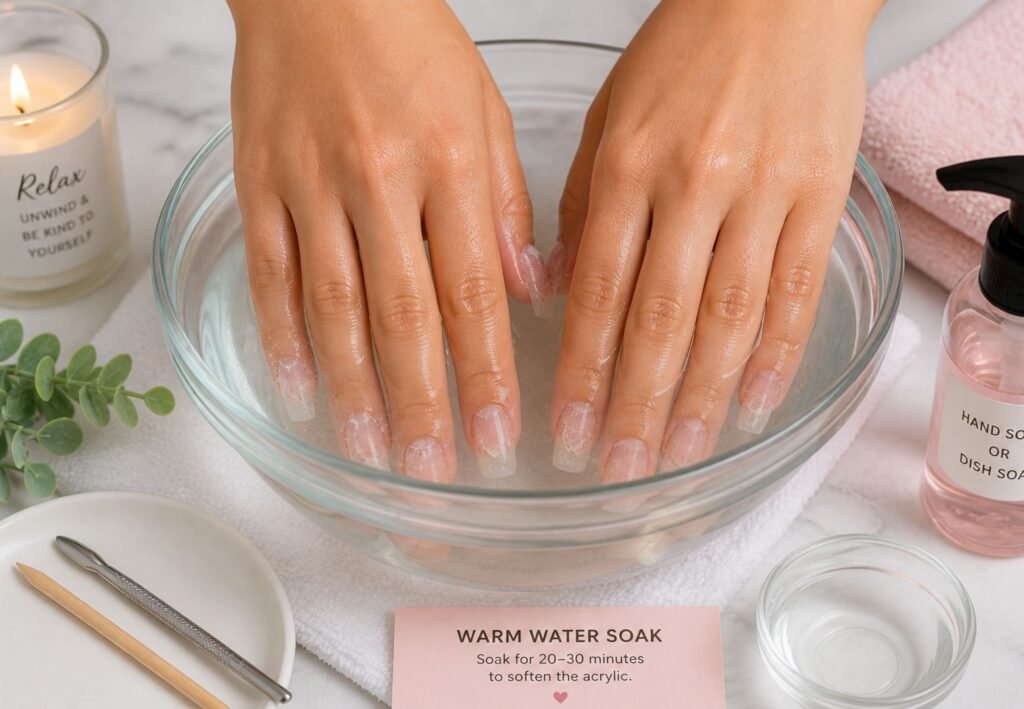
As a result, the adhesive softens, which makes removal easier and safer.
Cuticle Oil / Oil Soak Method
Oils help break down the adhesive while keeping your nails hydrated.
Steps:
- First, apply generous cuticle oil or olive oil to your nails.
- Next, soak your fingers in warm water mixed with oil.
- Then, gently lift the acrylic edges using a wooden stick.
- Continue applying oil as you work.
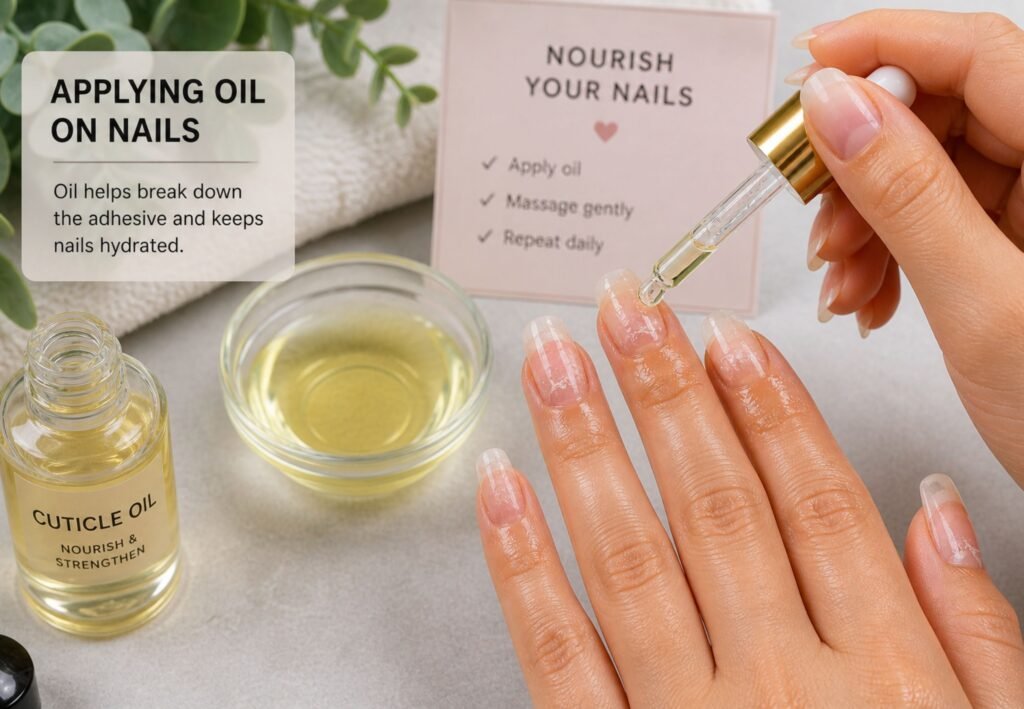
In addition, this method nourishes your nails while you remove acrylics.
Nail File Method
This method requires patience, but it works effectively.
Steps:
- First, use a coarse nail file to reduce the thickness of the acrylic.
- Next, switch to a finer file as you get closer to your natural nail.
- Then, buff the remaining product gently.
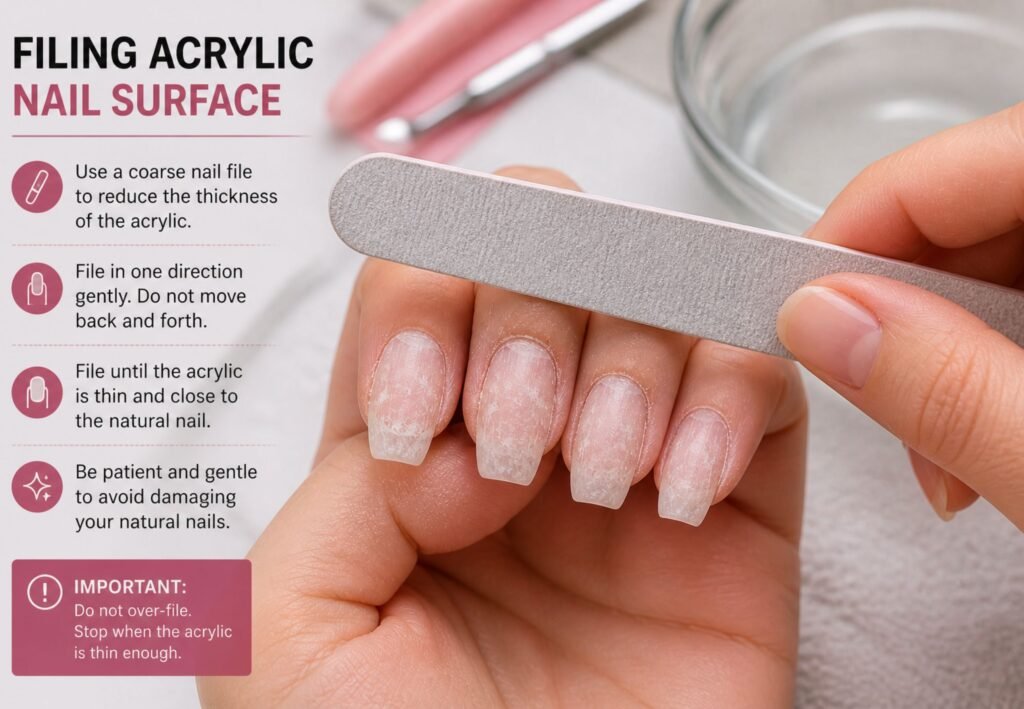
However, avoid over-filing because it can damage your natural nail surface.
Credit Card / Floss Method
This method works similarly to the dental floss technique.
Steps:
- First, find a small gap under the acrylic nail.
- Next, slide a credit card or thin object under the edge.
- Then, gently wiggle it to lift the nail.
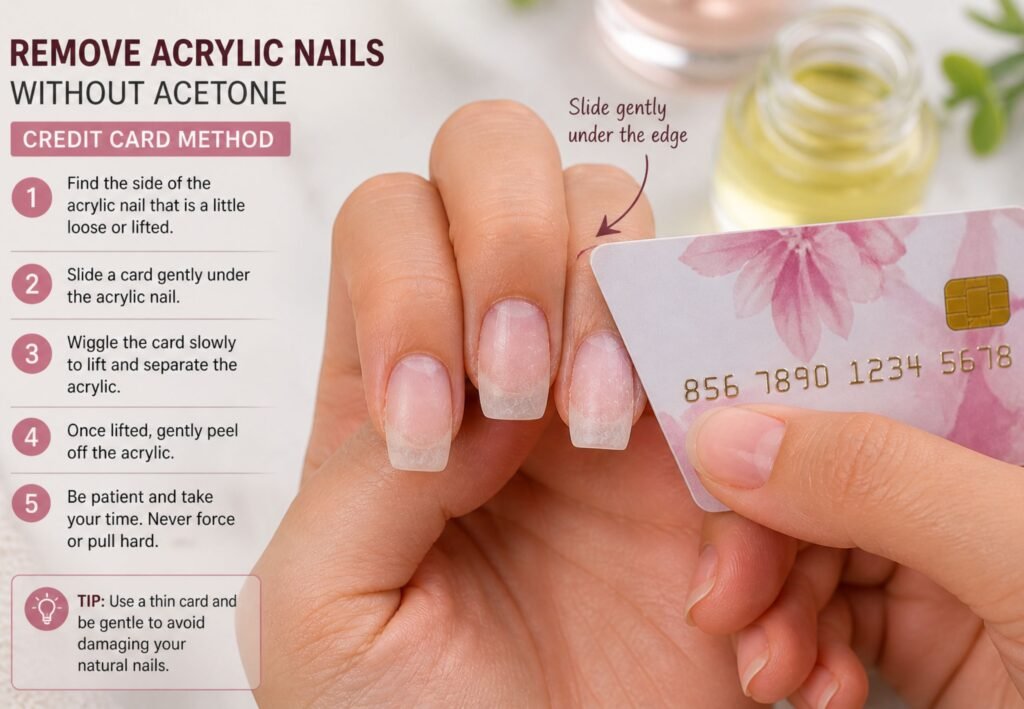
Again, only use this method if the acrylic already feels loose.
Tips to Protect Your Natural Nails After Removal
After you remove acrylic nails without acetone, your nails need extra care.
First, moisturize your nails daily using cuticle oil. This step restores hydration quickly.
Next, avoid applying new acrylics immediately. Give your nails time to recover.
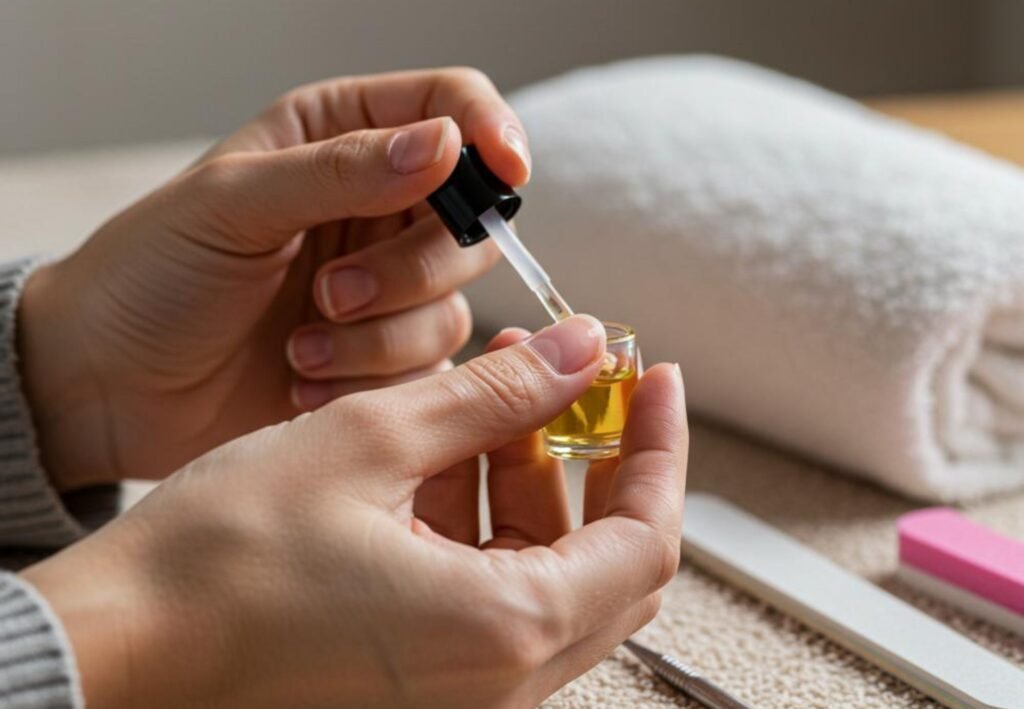
In addition, trim and shape your nails to prevent breakage. Short nails stay stronger.
Moreover, use a strengthening nail treatment. This helps rebuild nail health over time.
Finally, drink enough water and maintain a healthy diet. Strong nails start from within.
When to See a Nail Technician
Sometimes, at-home removal does not work well. Therefore, you should visit a professional in certain situations.
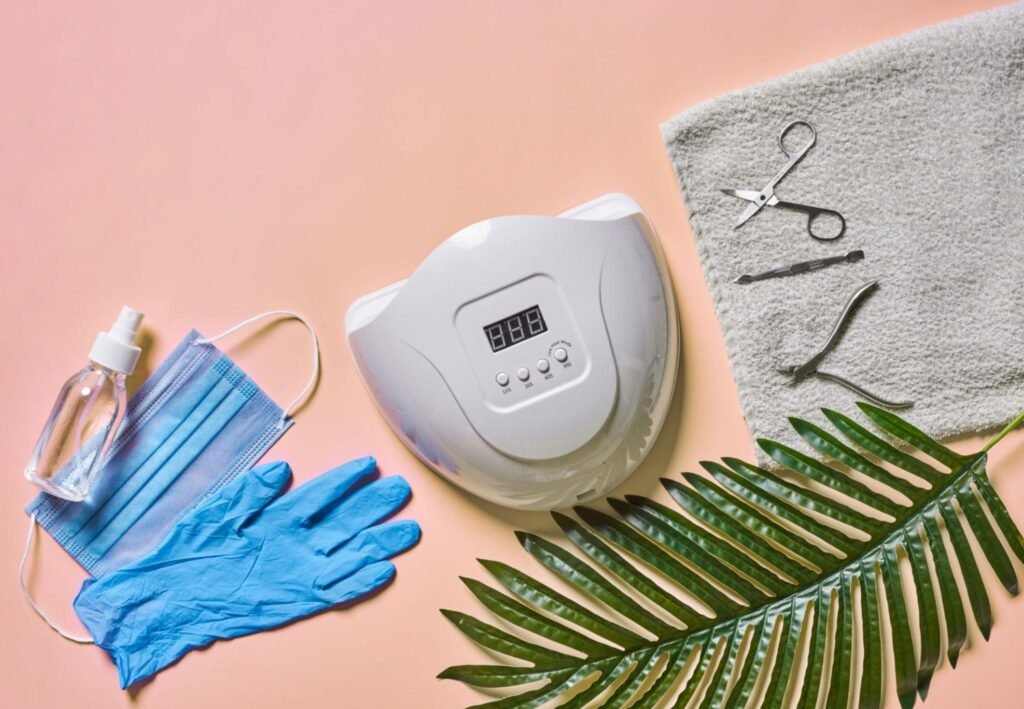
For example, if your acrylic nails feel extremely tight or painful, stop immediately. A nail technician can remove them safely.
In addition, if you notice damage, infection, or severe thinning, seek expert help. Professionals use proper tools and techniques to prevent further harm.
Conclusion
In conclusion, you can easily remove acrylic nails without acetone using gentle and effective methods at home. Whether you choose warm water soaking, oil treatment, or careful filing, each method protects your natural nails. Moreover, proper aftercare ensures strong and healthy nail growth. So, take your time, stay gentle, and always prioritize nail health over speed.
FAQs
Q: Can I really remove acrylic nails without acetone?
A: Yes, you can remove acrylic nails without acetone using safe methods like soaking, filing, or flossing.
Q: How long does it take to remove acrylic nails without acetone?
A: It usually takes 20–45 minutes depending on the method you choose.
Q: Which method is the safest for beginners?
A: The warm water soak method is the safest and easiest for beginners.
Q: Will my nails get damaged without acetone?
A: Your nails stay healthier if you remove acrylic nails without acetone carefully and gently.
Q: Can I reuse acrylic nails after removal?
A: No, you should not reuse acrylic nails after removal because they lose their structure.