
You love the look of flawless, long nails but salon visits add up fast. The good news? Acrylic nails for beginners are much more approachable than you think. With the right tools, a clear process, and a little patience, you can create beautiful acrylic nails right at home. This guide walks you through everything from supplies to step-by-step application so you can skip the salon and nail it yourself.
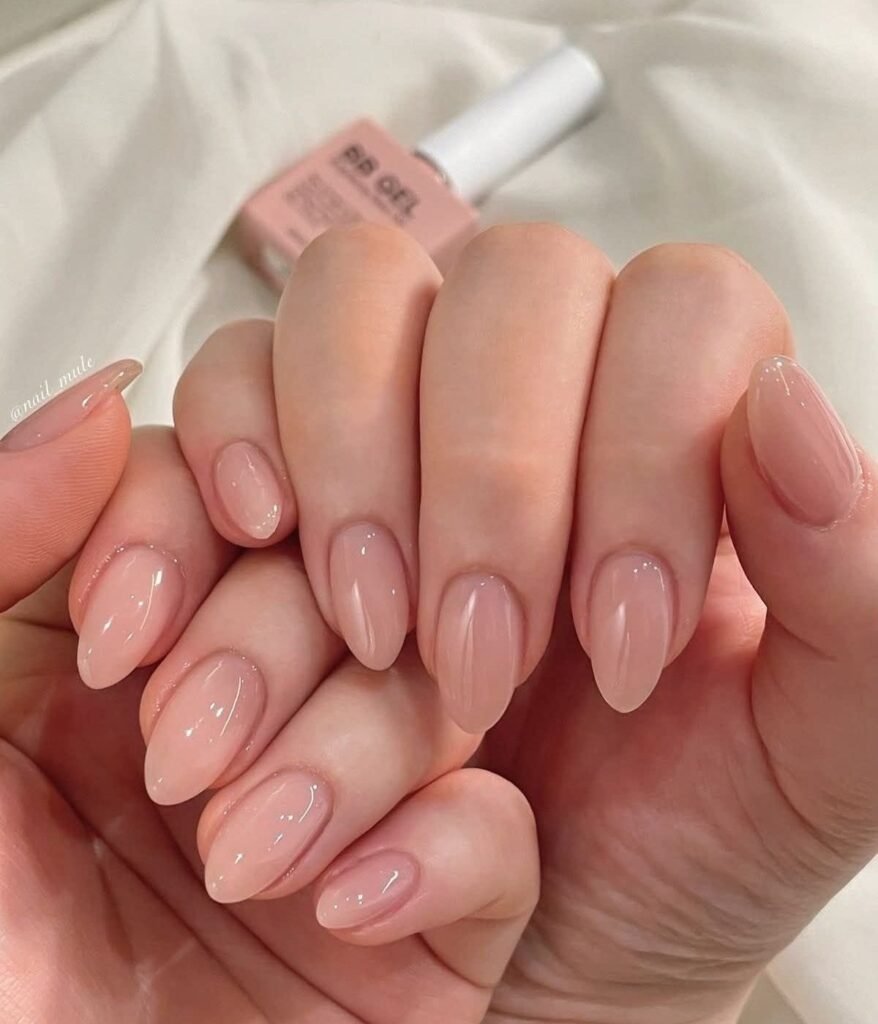
What Are Acrylic Nails and Why Beginners Love Them
Acrylic nails are nail extensions that combine acrylic powder and a liquid monomer to create a hard, durable layer over your natural nail. You can shape them, file them, and paint them however you like.
Beginners love acrylic nails for a few key reasons. First, they last two to three weeks with minimal chipping. Next, they give you full control over shape and length. Finally, they cost a fraction of regular salon visits once you own your kit.
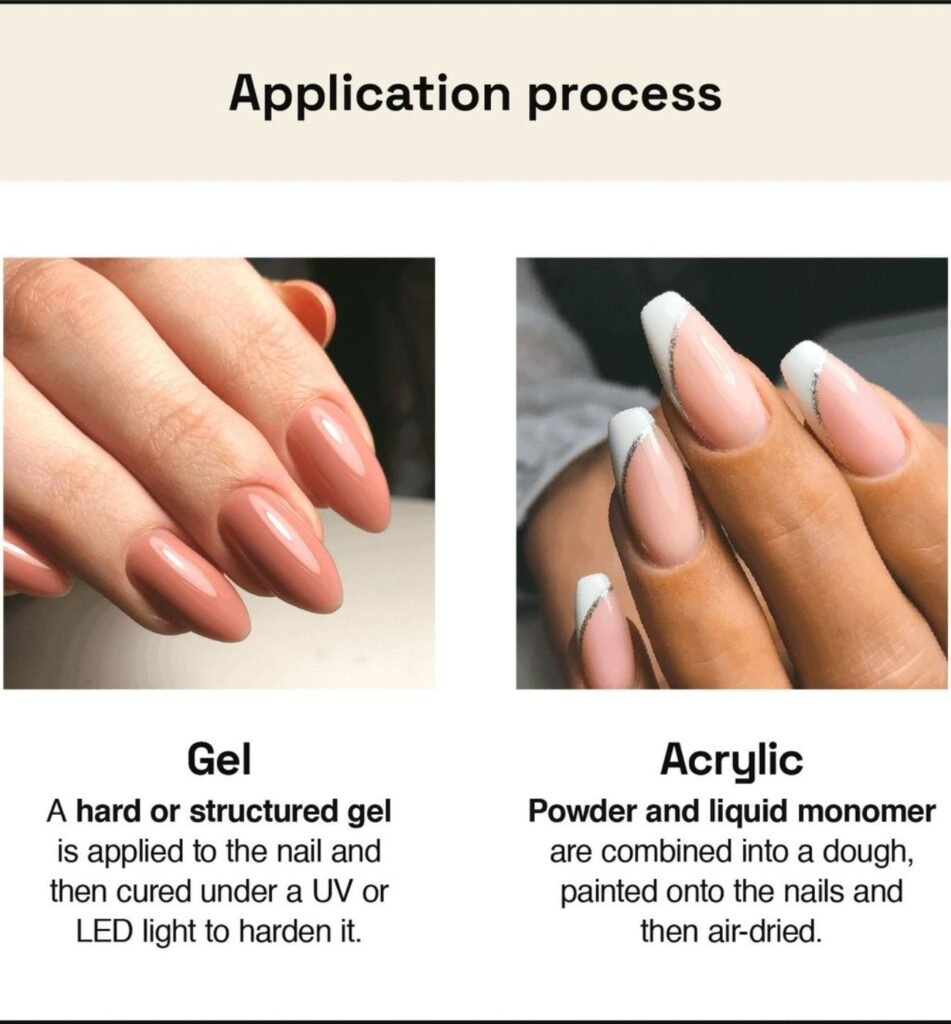
Unlike gel nails, acrylics do not need a UV lamp to cure. They harden on their own in minutes which makes the process much simpler for beginners.
Essential Tools and Supplies You Need to Get Started
Your beginner acrylic nail kit should include
Acrylic powder
Liquid monomer
Nail tips
Nail primer
Kolinsky brush
Nail file & buffer
glue
dehydrator
forms
Top coat
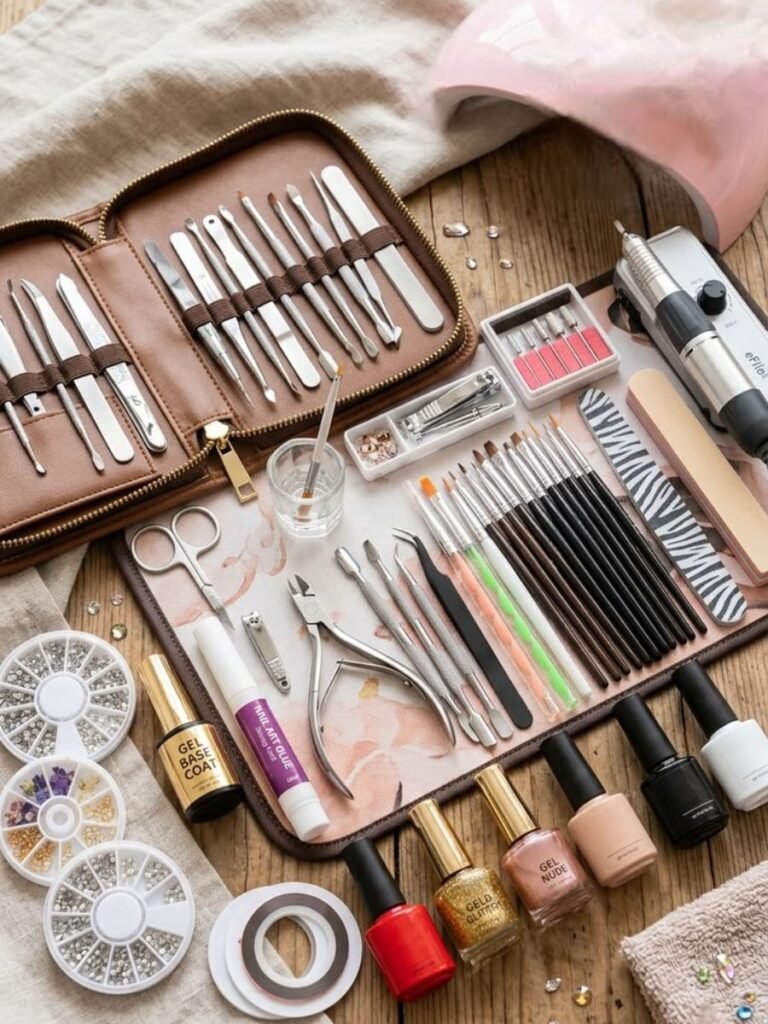
You can find most of these items in a single acrylic nail kit for beginners on Amazon or at a beauty supply store. Starter kits range from $20 to $50 and include everything you need.
Optional but helpful extras
- Cuticle pusher and cuticle oil
- Lint-free wipes
- Nail dust mask (strongly recommended)
- Dappen dish for monomer
Step-by-Step Guide: How to Apply Acrylic Nails for Beginners
This is the exact process beginners should follow for clean, lasting results. Take your time on each step rushing causes lifting and poor adhesion.
1
Prep your natural nails. Push back your cuticles and lightly buff the surface of each nail. Apply a nail dehydrator, then let it dry fully. This step removes oils and creates a clean surface for the acrylic to bond to.
2
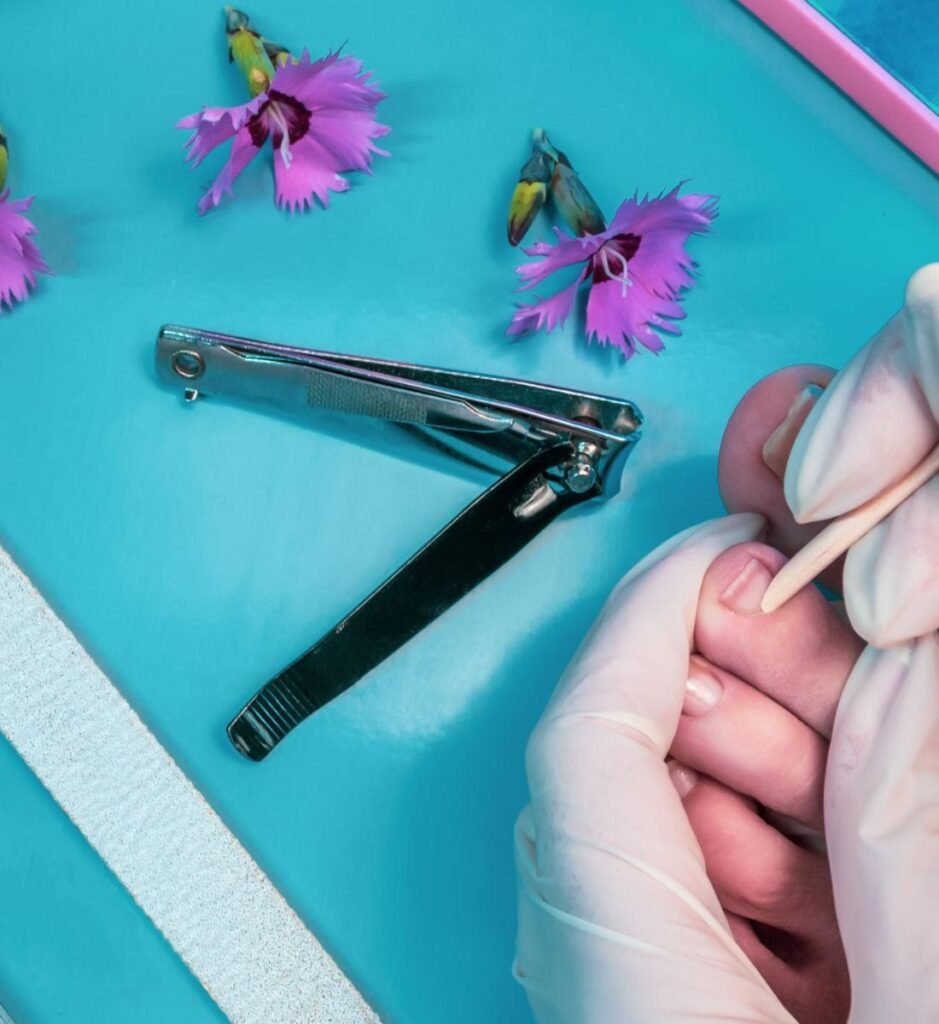
Apply nail tips or forms. Choose nail tips that match your nail width. Apply a small drop of nail glue to the tip, press it firmly onto the nail, and hold for 10 seconds. Trim them to your desired length with nail clippers.
3
Apply nail primer. Brush a thin layer of nail primer over each nail. Let it dry until it turns white. Primer helps the acrylic bond strongly and prevents lifting do not skip this.
4
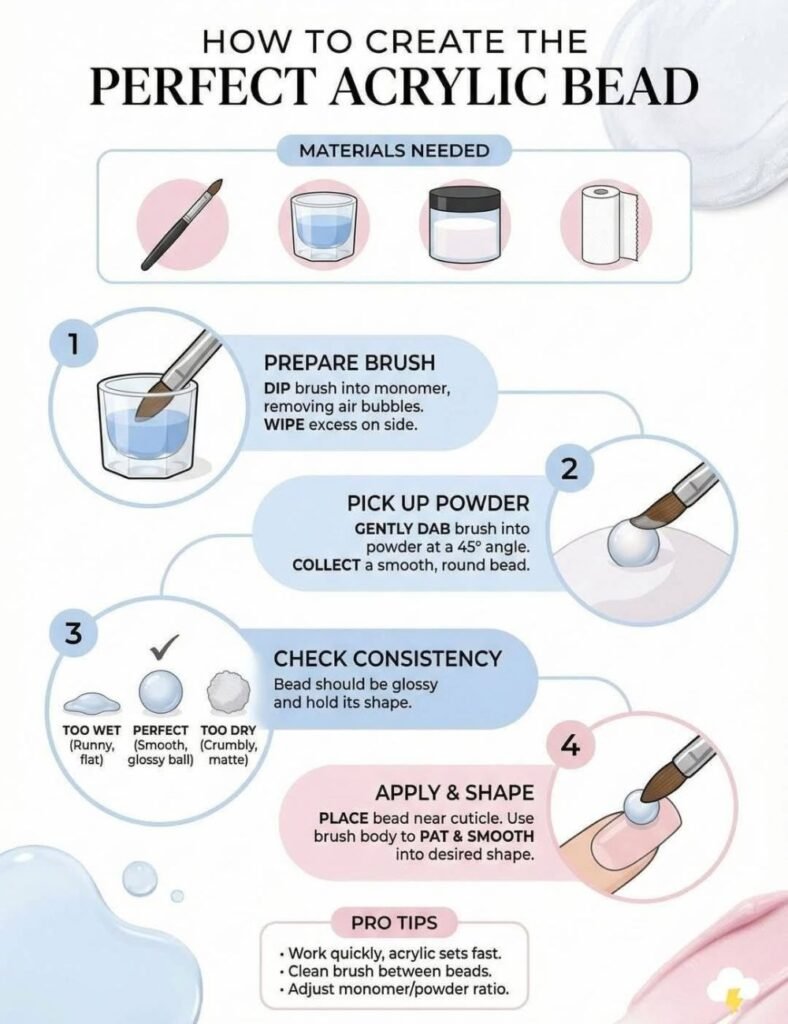
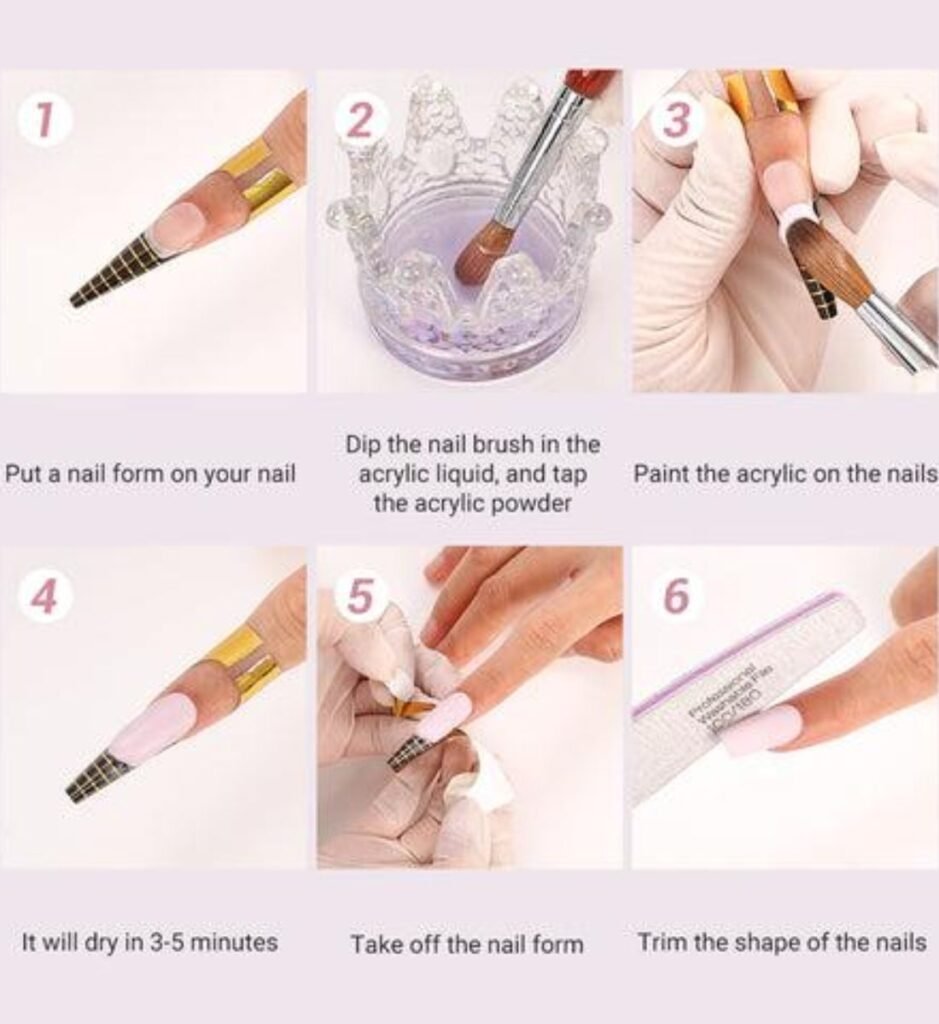
Mix and apply acrylic. Dip your brush into the monomer, then touch it to the acrylic powder. A small, wet bead will form. Place the bead near the cuticle area and gently pat and press it flat. Work in three sections: cuticle zone, middle, and tip. Keep beads medium-wet not too dry, not too runny.
5
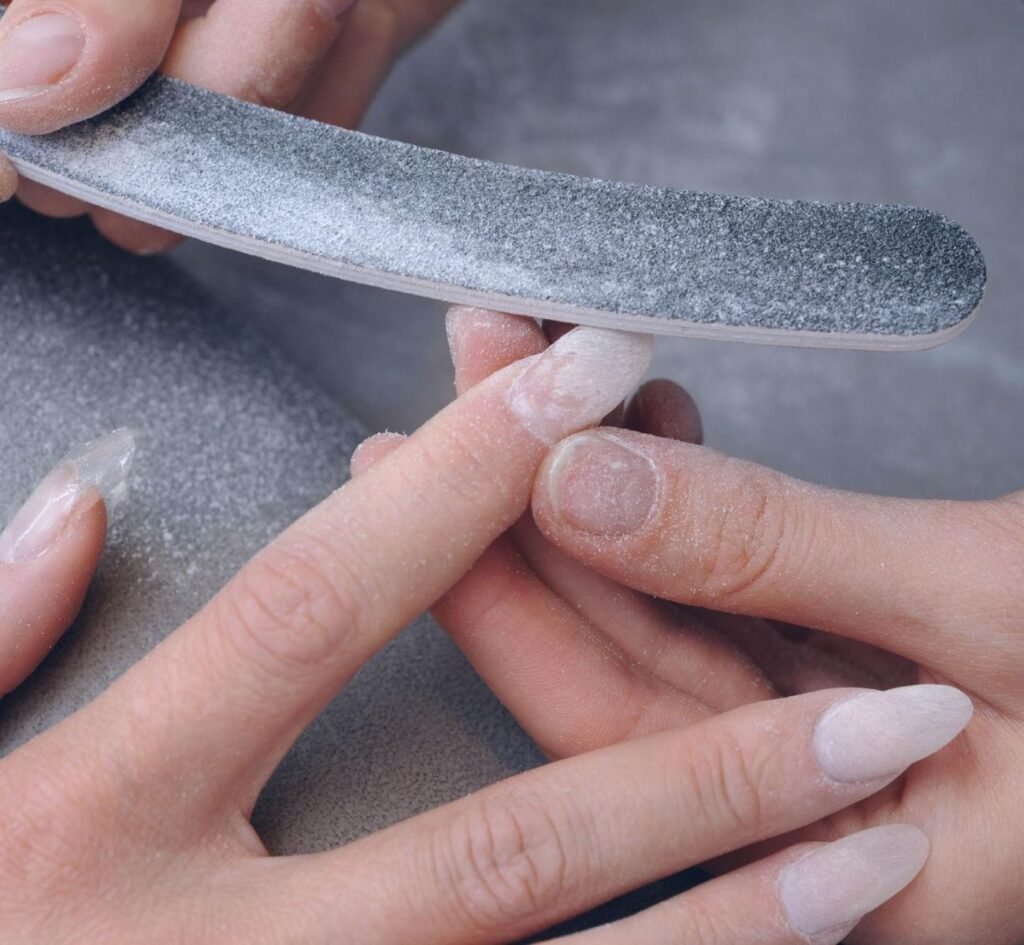
Shape and file. Once the acrylic hardens (about 2 minutes), use a coarse nail file to shape the sides and edges. Then use a finer buffer to smooth the surface. Wipe away dust with a lint-free wipe.
6
Finish with top coat. Apply your favourite nail polish, then seal everything with a clear top coat. Let it dry fully before touching anything.
Common Mistakes Beginners Make and How to Avoid Them
Most beginners run into the same few problems. Here is what goes wrong and how to fix it.
Mistake
Skipping nail prep
Fix
Always dehydrate and prime this prevents lifting within days.
Mistake
Too much monomer on the brush
Fix
Use a medium-wet bead runny acrylic floods the cuticle and does not cure evenly.
Mistake
Touching the cuticle with acrylic
Fix
Leave a tiny gap acrylic on skin causes lifting and breakage fast.
Mistake
Filing too aggressively
Fix
File in one direction with medium pressure sawing back and forth weakens the structure.
Mistake
Skipping fills after 2 weeks
Fix
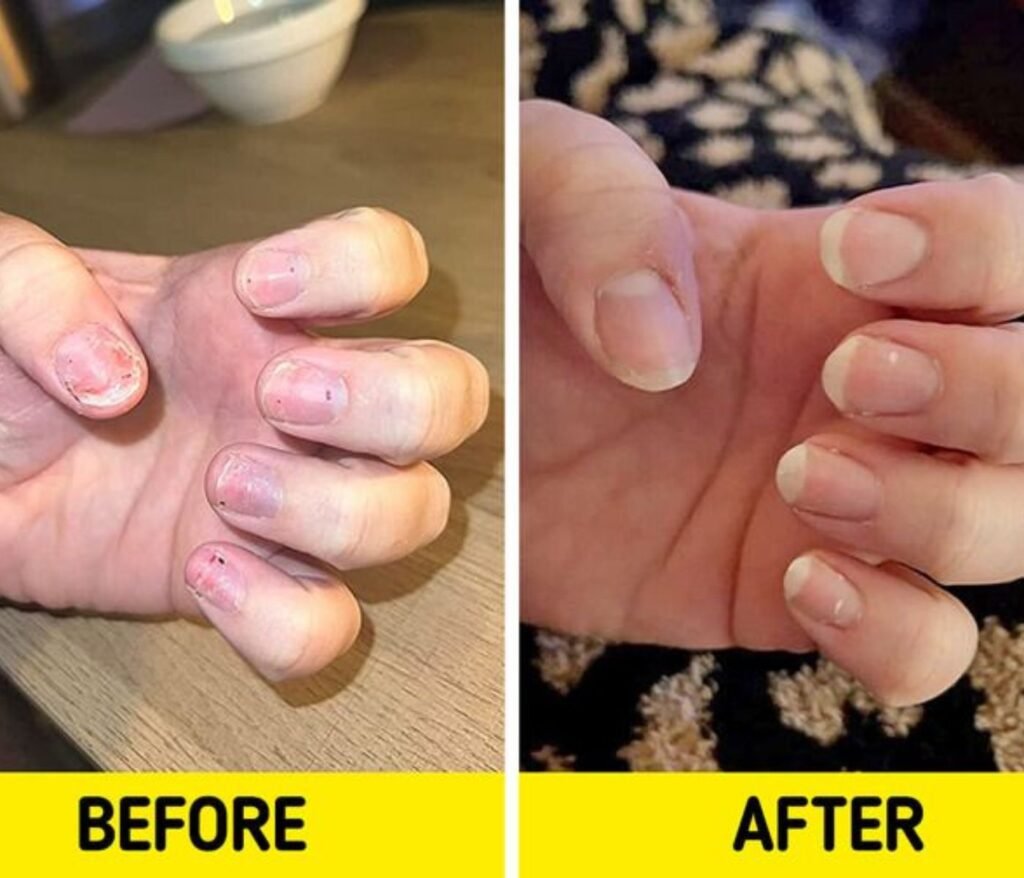
Book or do a fill every 2–3 weeks to keep nails strong and gap-free.
How to Maintain and Remove Acrylic Nails Safely
Maintenance tips
- Apply cuticle oil daily to keep skin and nails hydrated.
- Wear gloves when washing dishes or cleaning with chemicals.
- Get a fill every 2 to 3 weeks as your natural nails grow.
- Avoid using your nails as tools they will snap at the tip.
Safe removal at home
- File off the top coat and surface layer with a coarse nail file.
- Soak cotton balls in pure acetone, then press them onto each nail.
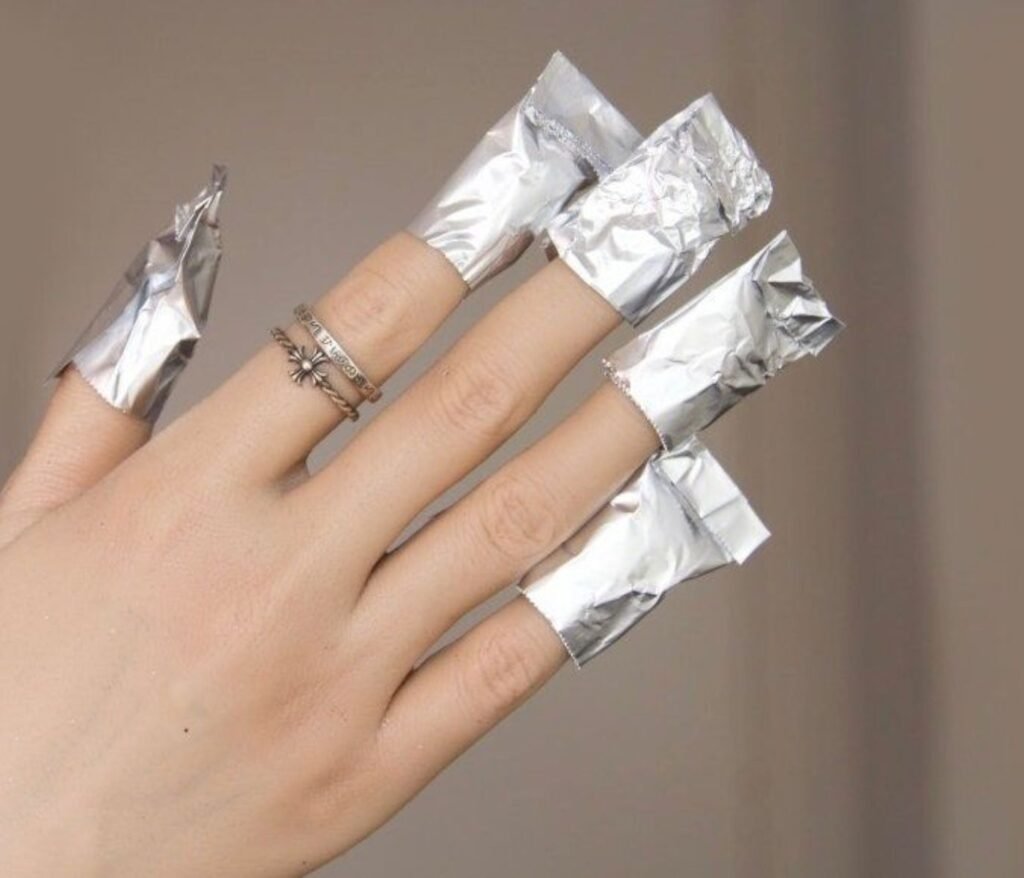
- Wrap each finger tightly in aluminium foil and wait 20 minutes.
- Gently slide off the softened acrylic do not force or pry it.
- Buff away any residue and apply a nourishing cuticle oil right away.
Pro Tips to Get Salon-Quality Results at Home
These beginner nail tips separate good results from great ones.
- Work in a ventilated room monomer fumes are strong and need fresh airflow.
- Use a dappen dish to hold your monomer instead of dipping directly from the bottle.
- Practice your bead ratio on a practice hand or fake tip before touching your actual nails.
- Keep your brush clean wipe it on a lint-free wipe between each nail.
- Watch your liquid-to-powder ratio beginners often go too wet, which weakens the final nail.
- Work under bright lighting you will spot uneven application and bubbles much faster.
- Film yourself practicing it helps you see posture, brush angle, and bead placement from a new angle.
Most importantly, give yourself grace. Acrylic nail application is a skill. Your fifth set will look far better than your first that is a promise.
Frequently Asked Questions
1. How long do acrylic nails last for beginners?
Acrylic nails typically last two to three weeks before they need a fill, especially when you prep and apply them correctly from the start.
2. Can I apply acrylic nails without a primer?
You can, but skipping nail primer significantly increases the chance of lifting within just a few days of application.
3. What acrylic nail supplies do beginners really need?
Beginners need acrylic powder, liquid monomer, nail tips, a Kolinsky brush, nail primer, a nail file, and a top coat to get started.
4. Do acrylic nails damage natural nails?
Acrylic nails do not damage natural nails when you apply and remove them correctly the damage comes from forced removal or improper prep.
5. How long does it take to apply acrylic nails at home as a beginner?
Expect your first full set to take 90 minutes to two hours speed builds naturally with each practice session.